

TM 1-1500-204-23-11
DO NOT center punch advanced composites.
(g) If the new part is made from advanced
composites, pilot drill 0.098 inch diam-
eter holes at the intersection marks. If
the new part is metal, center punch the
intersection mark.
(h) Remove the part from the structure.
(i)
Enlarge the pilot holes to full size. Use
several intermediate size drills to bring
holes to inal size. Be careful to keep
drills centered on the fastener holes.
(j)
If the replacement part is metal, deburr
holes. If the part is advanced compos-
ites, no additional steps are required.
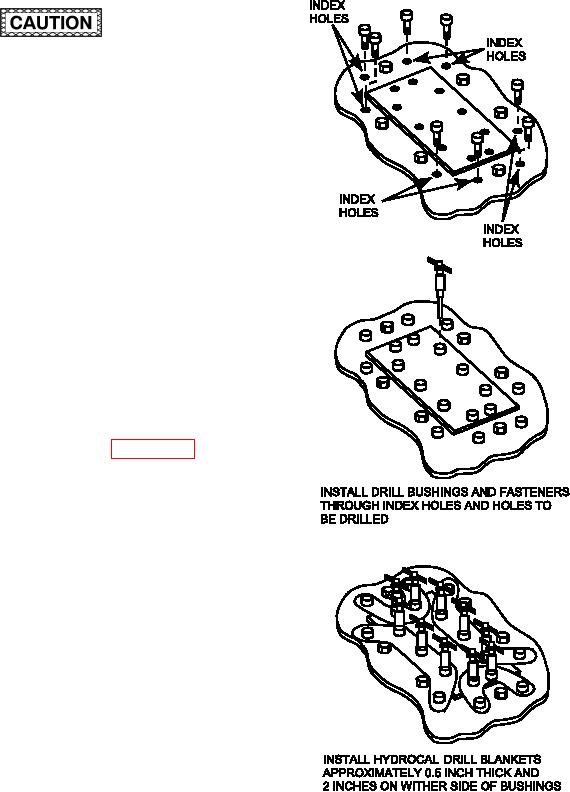
(4) Mold Method. This method can success-
fully transfer blind holes and maintain a Class II
tolerance (+0.0025/-0.000 inch). This method uses
Hydrocal plaster to form a rigid drill blanket from the
part being repaired or replaced. Figure 7-25 illus-
trates how this method is used with the following
procedures:
Figure 7-25. Mold Method of Transferring Blind
Holes
(a) Remove fasteners from the damaged
part.
(b) Inspect the fastener holes to insure the
holes are within tolerance.